
Once you have decided on real timber over composite, the next question is which timber. It is an easy thing to get talked into without thinking, and the wrong choice shows up a few years later as a deck that has cupped, faded badly or worn out before its time.
Here is how we think it through. There is no single best board, only the best board for your place, your budget and how much upkeep you are honestly up for.
Start with what actually matters
Forget the names for a second. A decking timber is really just a balance of five things:
- Durability: how well it resists rot and insects outdoors over the years.
- Hardness: how well it shrugs off dents, scratches and foot traffic.
- Look: colour, grain and how it ages.
- Upkeep: how often it wants oiling to stay looking good.
- Cost: the price of the boards, which tracks fairly closely with the first two.
The popular species score well on the first two, which is exactly why they are popular. Where they differ is look, upkeep and cost.
Durability and hardness are not the same thing
People mix these two up all the time, so it is worth a quick word.
Durability is about rot and decay resistance. Australian hardwoods are graded by durability class, and the best of them are rated to last a long time outdoors above ground. Hardness is about the surface: how easily it dents or marks. A timber can be very durable but still mark, or very hard but not especially durable.
For a deck you want both, which is why dense hardwoods win. Just know that even a hard timber will mark eventually, and that is character, not failure.
The usual suspects
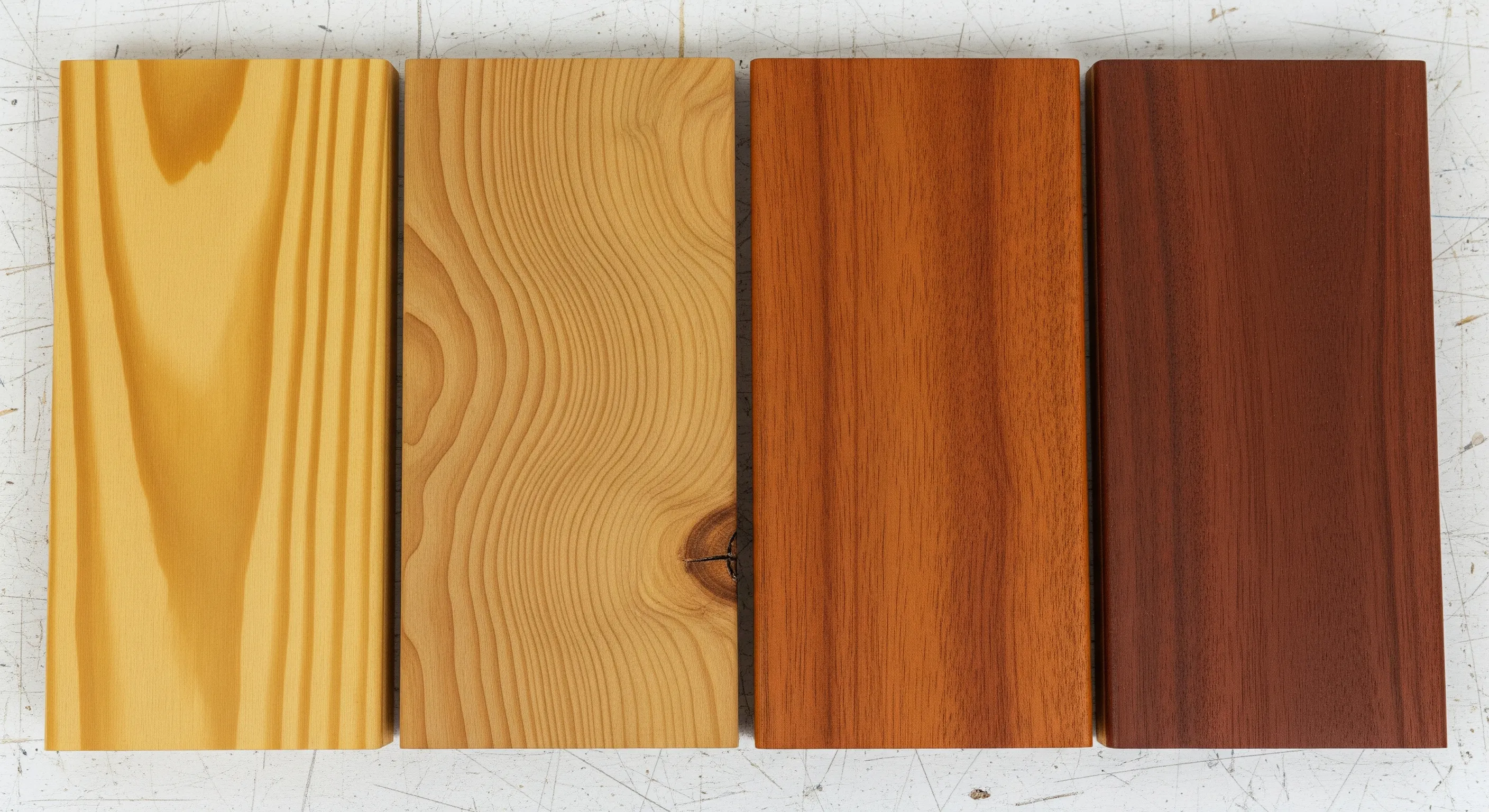
Spotted gum. One of our mainstays. A tough, dense Australian hardwood with beautiful flowing grain and colours that run from pale browns through to deep chocolate. Very durable, very hard, and it ages gracefully. A safe, handsome choice for most decks.
Merbau (kwila). The other mainstay, and the rich red-brown board most people picture when they think hardwood deck. Very durable, stable, and widely available, which keeps the price sensible. Two things to know: it bleeds tannins when it first gets wet, so it can stain nearby surfaces early on, and you should make sure it comes from a responsibly sourced supplier.
Blackbutt. A lighter, straight-grained Australian hardwood. Durable and a good performer, and it is commonly specified on bushfire-prone land because it carries a bushfire resistance rating. If your block has a bushfire overlay, this one is often on the list.
Treated pine. The budget option. Softer and less durable than the hardwoods, but pressure treatment lets it cope outdoors, and the price is friendly. It wants more upkeep and will not have the depth of a hardwood, but for a tight budget or a deck that will be painted, it has its place.
Premium hardwoods (ironbark and similar). If you want the hardest, most durable boards going and the budget allows, the very dense hardwoods are about as tough as decking gets. They cost more and are heavier to work with, but they last.
Rule of thumb: spotted gum or merbau for most decks, blackbutt if you are in a bushfire area, treated pine if budget rules, premium hardwood if you want the best and will pay for it.
All timber greys, and that is normal
Left unoiled, every one of these boards will silver off to grey in strong sun and salt air. That is the timber doing its thing, not a fault. If you love the fresh colour, you keep it with oil. If you are happy with a weathered silver look, you can let it go, though a finish still helps the timber last. Either way, read how often you should oil a deck before you decide.
Where it comes from matters
Decking is one of those products where it pays to know the source. Responsibly grown and certified timber means you are not building your deck out of something that should have been left standing. We source our decking from trusted, reputable suppliers, and we are happy to talk through where a given board comes from before you commit. With merbau in particular, sourcing is worth asking about.
Cost
As a rough guide, price climbs with density and durability: treated pine at the friendly end, spotted gum, merbau and blackbutt in the popular middle, and the premium hardwoods up top. The boards are only part of the total, though. Fixings, the substructure and the labour all add up, so think about the finished deck rather than the dollar-per-metre on the timber alone. Real figures are TBC, so see pricing or run the numbers.
So which one?
If you want a classic, good-looking hardwood deck and do not mind keeping the oil up, spotted gum or merbau are hard to beat. If you are on bushfire-prone land, ask about blackbutt. If budget is the deciding factor, treated pine will get you a deck. And if you have decided you would rather the deck looked after itself, that is a sign to revisit composite versus hardwood before you buy.
Still weighing it up? Tell us about your place and we will help you choose the timber that suits it, then build it properly.
Thinking about your own deck? See our decking services or get a free quote.